

From the Archives | Acorn Dye Tutorial
An adventure in foraging and natural dye to create rich shades of gray.

Thank you for reading Acre. As an Art Director, gardener and cook, my content is a mix of seasonal recipes, kitchen notes, dinner party curations, and garden updates. I would love to have you join me on the Acre.
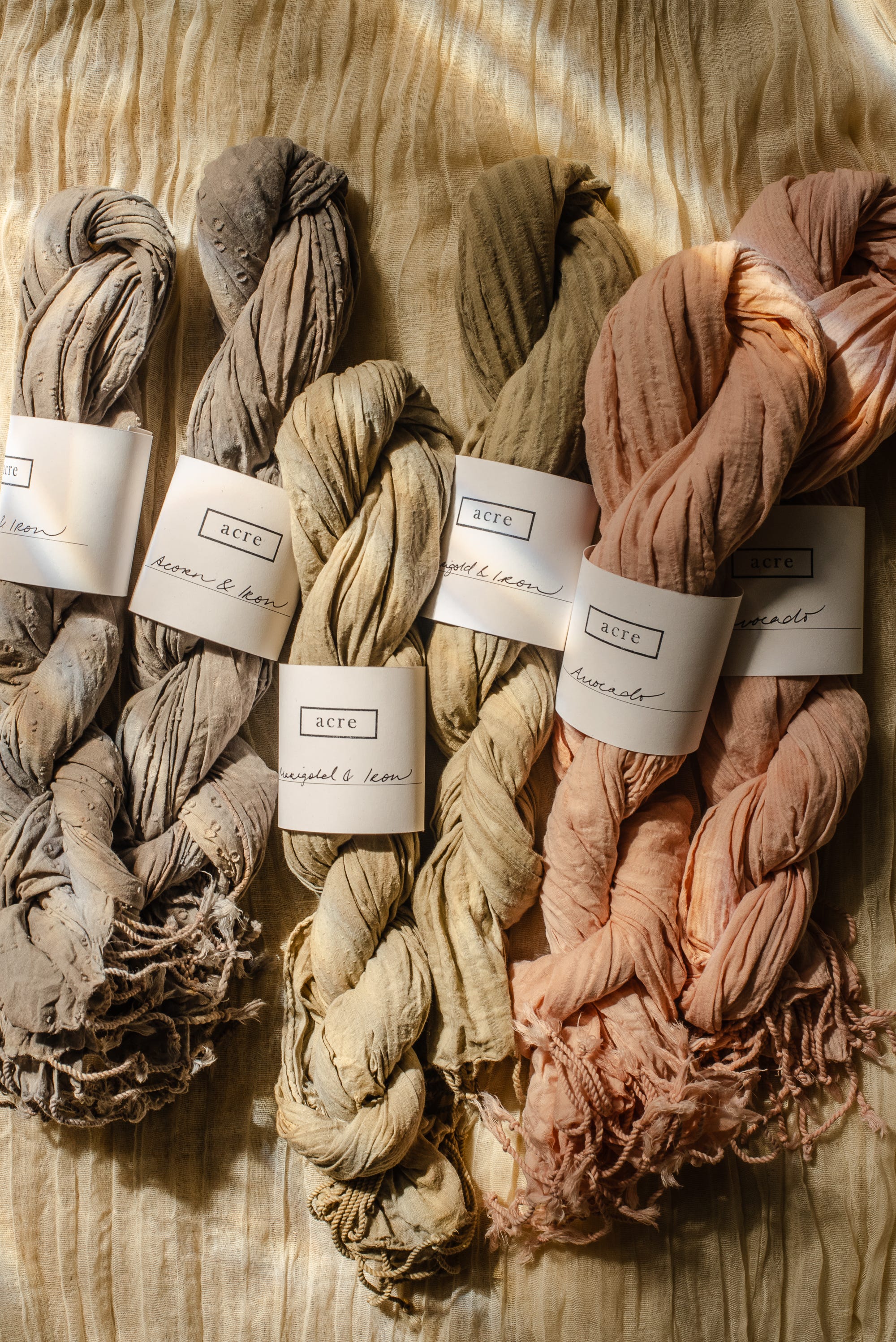
I love to create and use natural dyes using foraged materials and food waste–I currently have a limited run of naturally dyed scarves and bandanas for sale at Haus Theory. I occasionally share dye tutorials, with this tutorial being one of the most popular pieces of content I have shared. I hope you enjoy this process of dye creation, it is a slow and grounding process I have grown to deeply love.
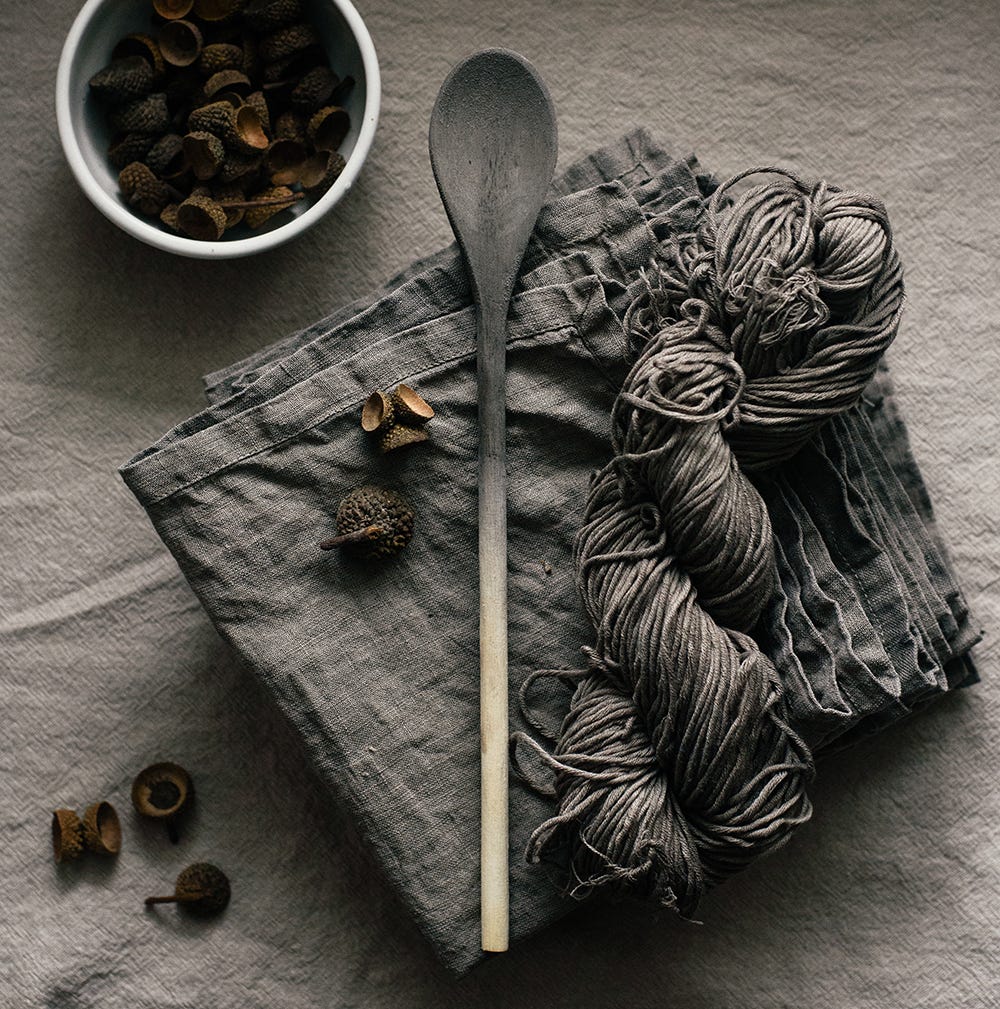
I grew up in woods filled with white oak trees. The big beautiful trees would drop their tiny capped seeds each season, covering the ground with a blanket of acorns. As I have experimented more with natural dyeing, I have discovered acorns produce incredible colors in the dye bath. On their own, they produce soft and rich shades of golden brown, and when dipped in a second bath of iron water, they produce stunning shades of gray, from soft and dusty dove to rich charcoal.

As you start working with acorn dye, know both the caps and nuts hold dye potential, and can be used at any point from when they have fallen off the tree before becoming a sapling. Remember with any foraged material to only take a small portion, leaving the rest for wildlife and new growth.

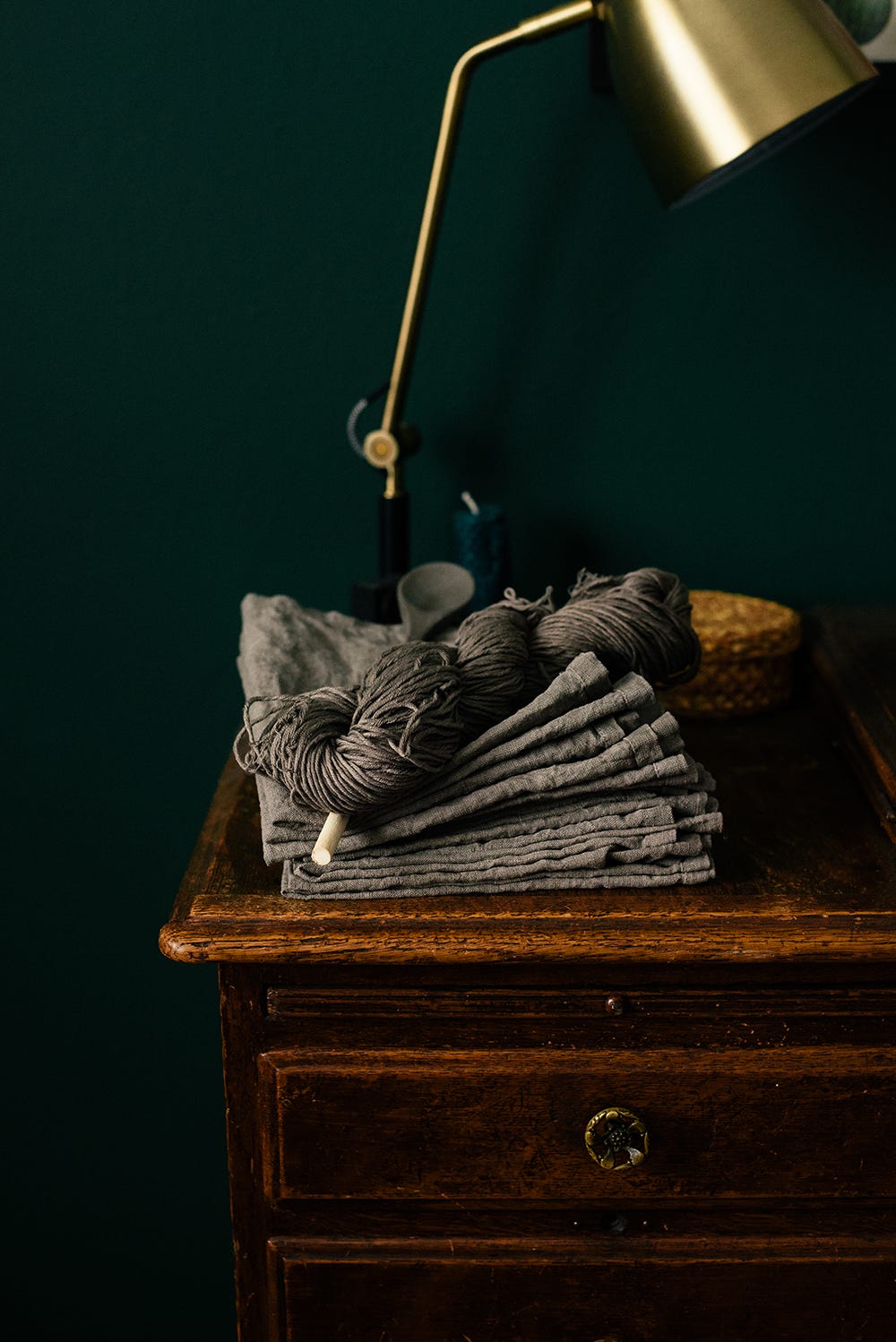
I have dyed a range of different fabrics and yarns in acorn dye, and found that dyeing linen napkins has been my favorite. It creates an incredibly rich table setting, adding warmth and earthiness to a winter dinner table. I love the idea of bringing the outdoors in during a season when not much can be gleaned from the outdoors. The linen also takes to acorn dye really well, making it a great first acorn dye project.
Dyeing does take time - from start to finish this process takes several weeks. I would encourage you to enjoy the slow pace - it will make the finished result all the more satisfying. For acorn dye, I have tested both mordanted and un-mordanted fabrics, and found little difference in the result. Acorns are rich in tannins, meaning they don’t need a mordant to set the color in fabrics. My method increases the amount of time fabrics spend in the dye to increase the intensity and setting power of the dye.
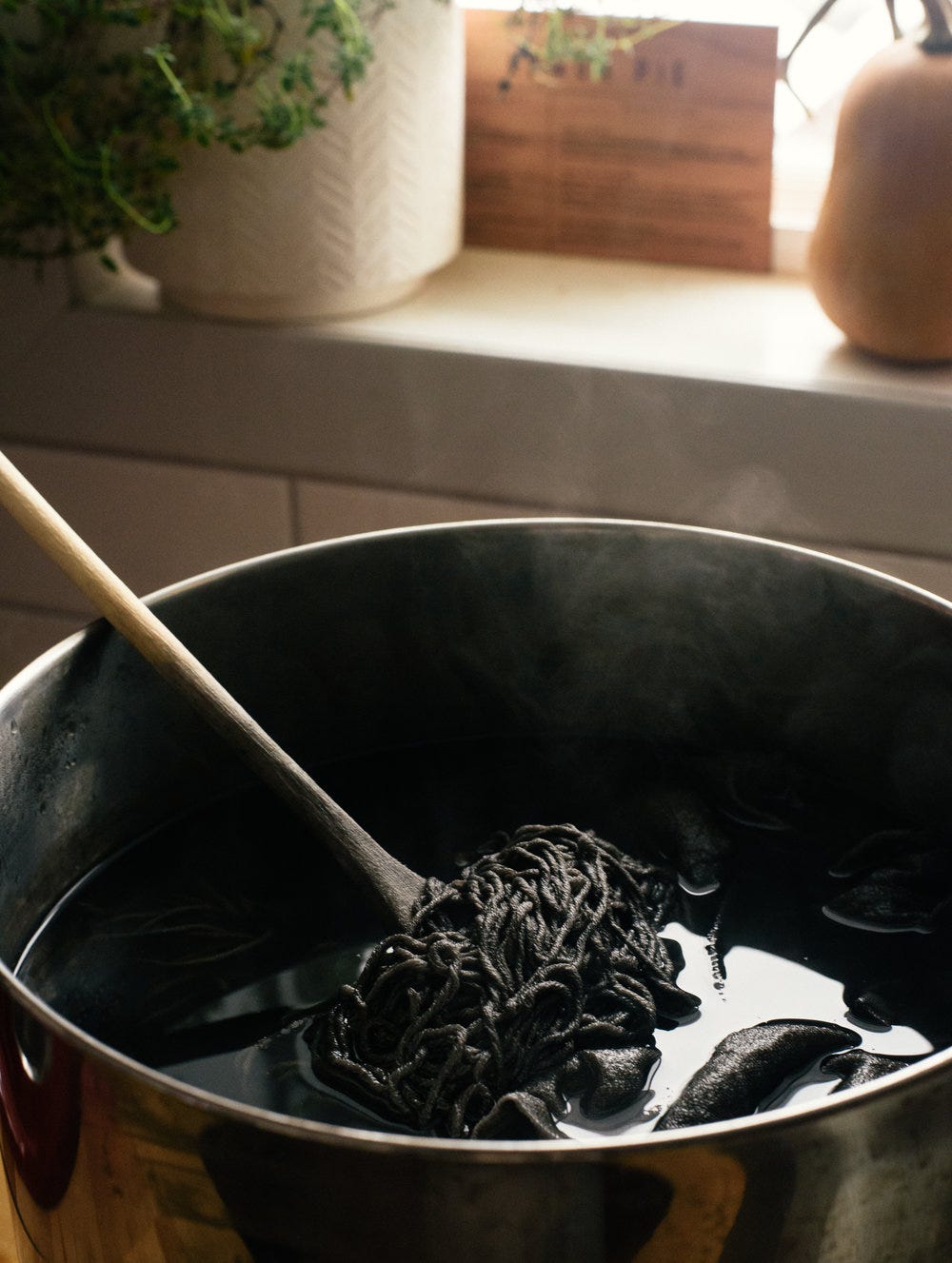
When I have a pot of dye, it is very hard for me not to fill it to the brim with yarn and fabric. Note that acorn dye has immense dye potential and can be used for several dye baths. The best dye baths allow your fabrics to be stirred easily and covered completely in the dye bath. I focus on dyeing linen napkins in this method, but if you fancy dyeing yarn, clothing or bandanas, experiment with the amount of fibers you add to the pot to have it still be stir-able. Note that all fibers must be 100% natural - synthetic or acrylic fibers do not take on color.

